
Juicer.Kitchen Verdict
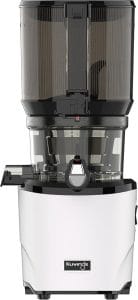
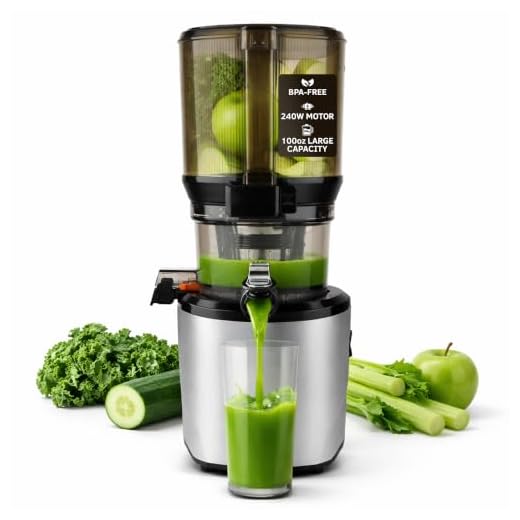
We genuinely like the Kuvings Auto10 and often reach for it when making juice in larger quantities. What stands out most is its 3-liter hopper — currently the largest on the market. In our testing, we extracted about a quart and a half of juice in a single run — roughly half a quart more than most 2-liter hopper models.
If you’re juicing for a family or making multiple servings at once, that extra capacity makes a real difference. You can break larger pieces in half or give them a quick slice, load the hopper, close the lid, and let it run. There’s no need to keep coming back to refill.
Beyond the hopper size, it’s also a well-built machine made in South Korea and backed by a 15-year warranty on motor and parts. Its heavy-duty motor is rated for 45 minutes of continuous use, which adds reassurance for longer juicing sessions. Built solidly and designed for long-term reliability, it’s the kind of juicer you can rely on for years.
Pros
Large 3-liter hopper — excellent for batch juicing
Hands-off operation
Heavy-duty motor with long runtime
15-year warranty on motor and parts
Cons
Premium price
Cleaning takes longer than screenless models
Why You Can Trust Juicer.Kitchen: We’ve been reviewing juicers for more than 12 years and have influenced over $3M in juicer purchases. Every recommendation here is based on hands-on testing, not marketing claims.
Kuvings Auto10 Detailed Review
Intro
When Kuvings announced the Auto10, we were curious right away. We’ve tested a wide range of slow juicers over the past decade — from early vertical masticating machines to the latest hopper-style automatics — so hearing that Kuvings was entering the hopper category with the largest hopper on the market grabbed our attention immediately.
After putting the Auto10 through our usual routines — weekly batch juicing, mixed vegetables, leafy greens, fruits, and a few longer runtime sessions — it became clear that Kuvings didn’t just enter the category, they entered the category with a serious contender.
These days, whenever we’re making larger batches or prepping juice ahead for a few days, the Auto10 is the machine we reach for. The large hopper eliminates the constant stop-and-refill cycle and makes batch juicing noticeably easier.
And the best part? No babysitting. No feeding produce piece by piece. You load the hopper, close the lid, and the Auto10 handles the rest while you focus on whatever else is happening in the kitchen.
Design & Build Quality
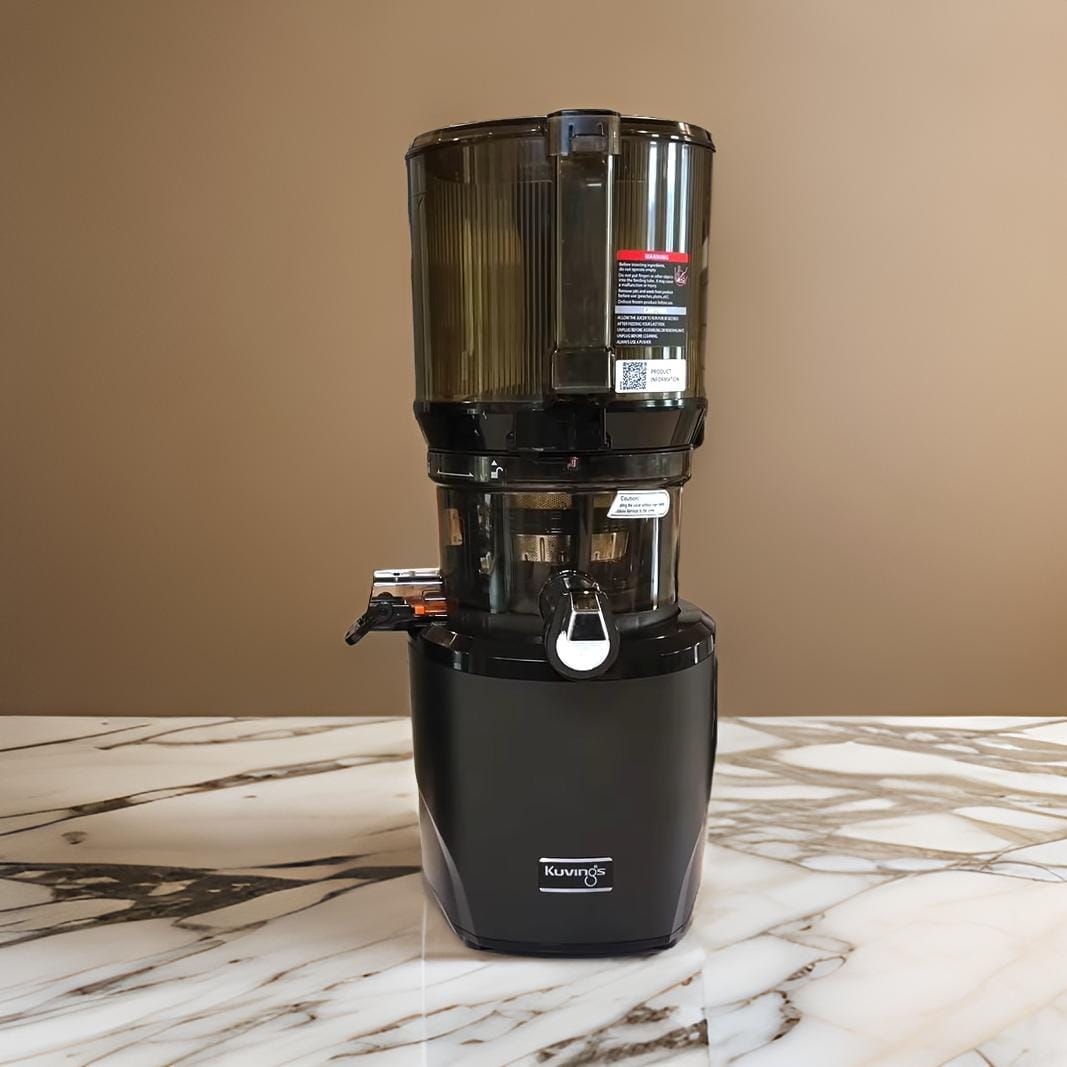
The first thing you notice is the 3-liter hopper — the largest on the market right now. Most premium hopper juicers use a 2-liter hopper, so the extra space makes a real difference. We routinely get 1.4–1.5 liters of juice in a single load, roughly half a liter more than comparable models.
Inside the hopper, an automatic processing blade pre-cuts produce and feeds it at a controlled pace, preventing overloads. This solves one of the most common issues with vertical juicers: users pushing ingredients too quickly and causing jams.
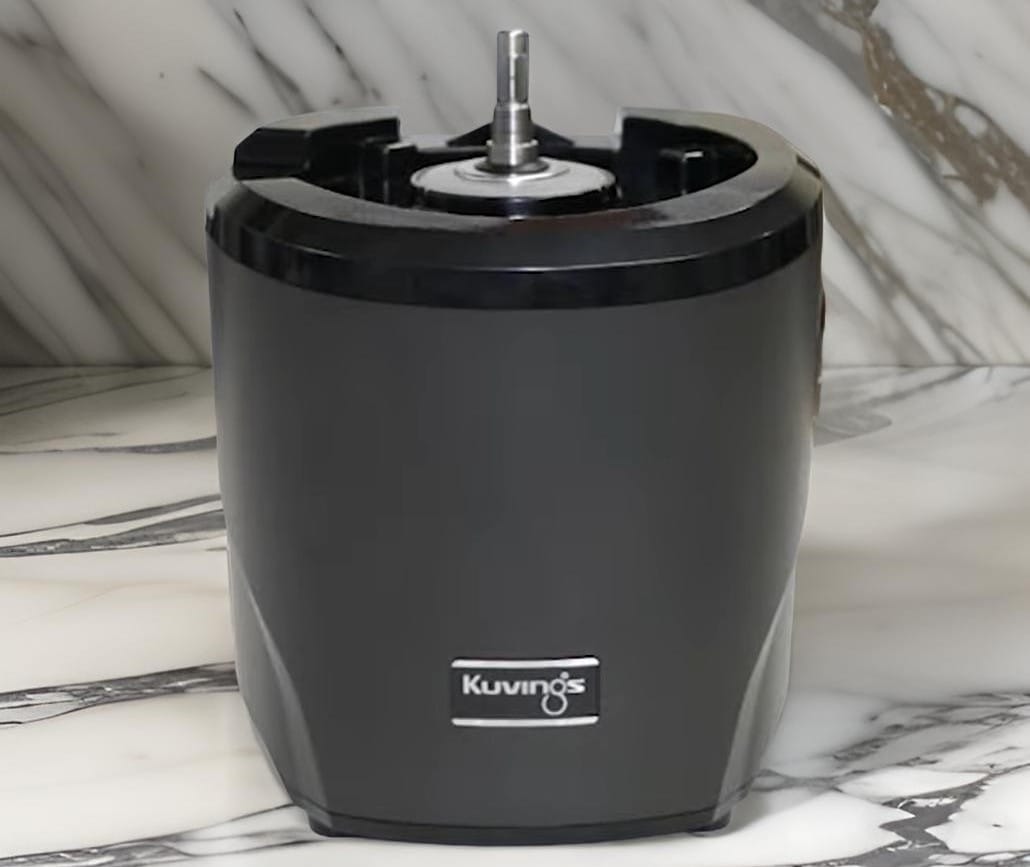
One thing we particularly like is the motor. It’s surprisingly heavy for its size, and you can feel the power when you lift it. The 240W motor is rated for 45 minutes of continuous use. In our testing, we ran it for close to an hour without overheating, though we recommend following the manufacturer’s guidelines for long sessions. Cheaper machines often overheat after 15–20 minutes and require a long cooldown just to finish a batch.
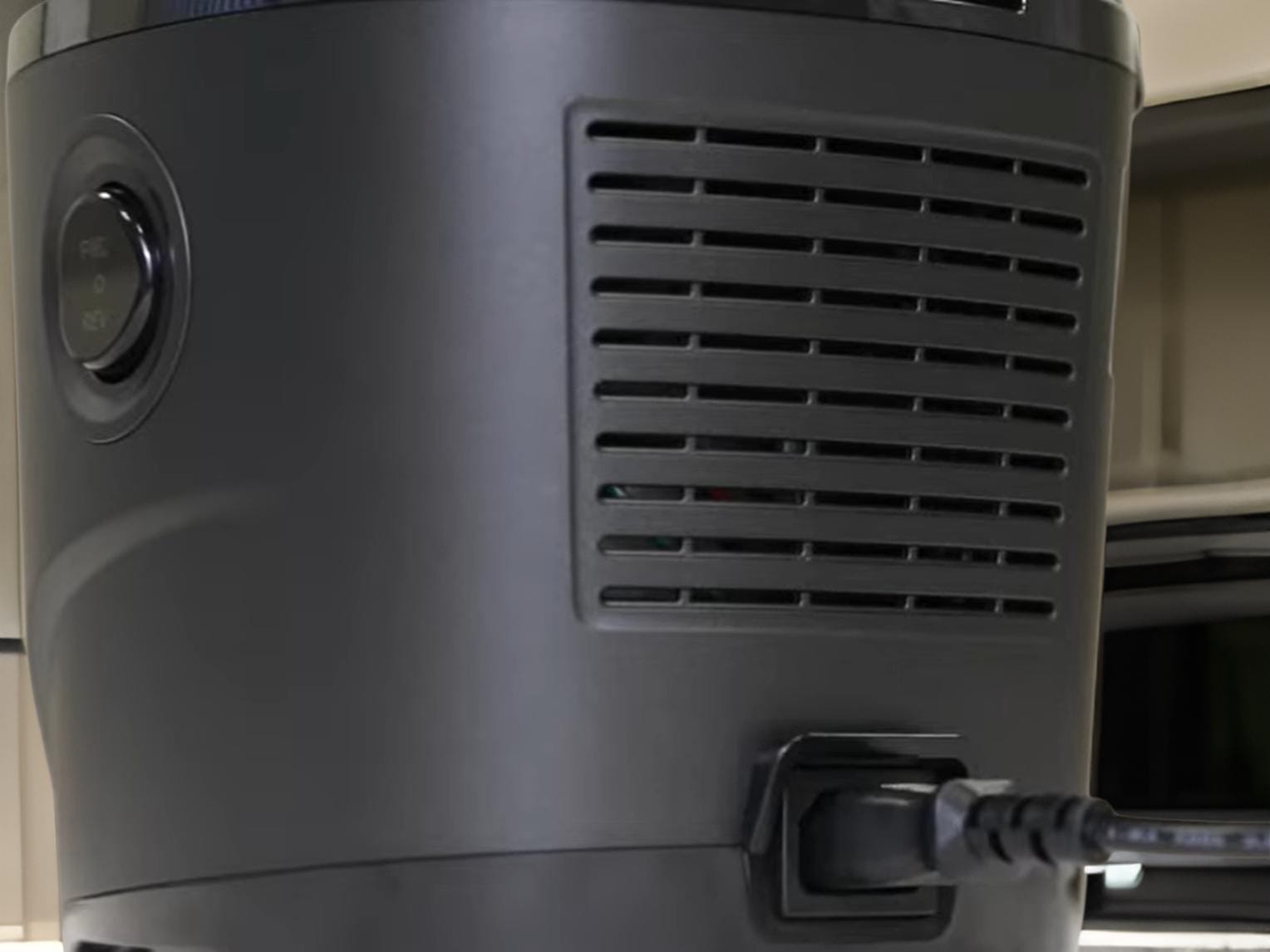
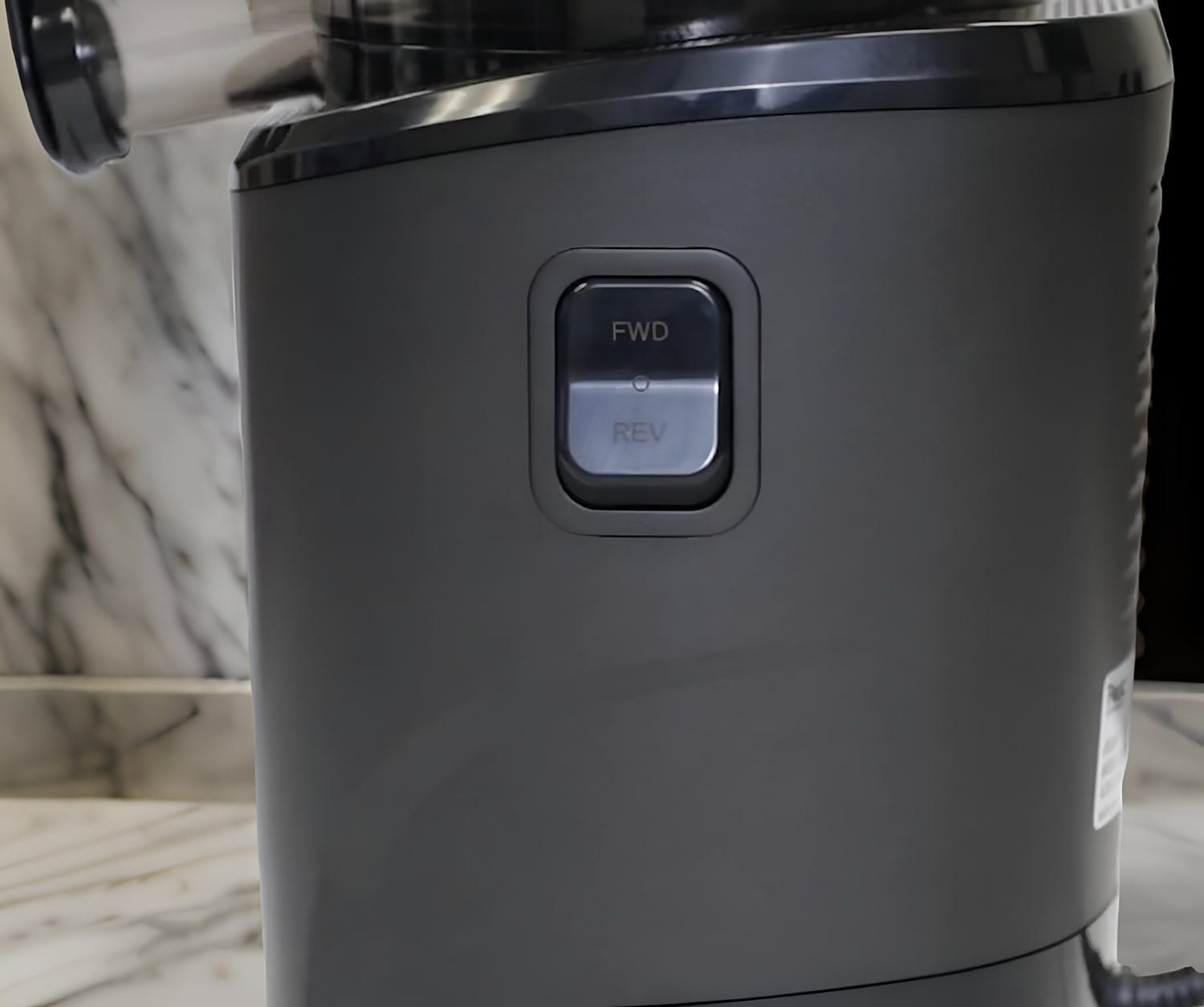
You also get a forward/reverse button on the side in case something gets stuck. On the back, there’s finally a detachable cord — a small change, but a genuinely useful one. Fixed cords are annoying to store and keep the machine tied to one spot.
Overall, the build quality is classic Kuvings: thick plastics, solid parts, and nothing that feels flimsy. It’s the kind of machine you expect to last a decade or more.
How to prep the produce?
The Auto10 lets you juice without pre-cutting if you want to, and we really pushed that. We started with tougher ingredients like whole beets, and the processing blade handled them without hesitation. We also filled the hopper completely with uncut carrots and walked away, and it worked exactly as promised.
That said, cutting produce into medium chunks lets you pack the hopper more efficiently. More produce per load means more juice per run and less babysitting overall. But it’s completely up to you. If you want the no-prep, toss-it-all-in approach, it works. If you want to maximize capacity, cutting helps.
Celery was the only time prep actually mattered. When we loaded a bunch of celery, the long stringy fibers eventually clogged the pulp chute after a couple of bunches. Once we switched to cutting the celery into smaller pieces, we could load the entire hopper and juice without any clogging at all.
Juice Quality
The Auto10 runs at 50 RPM, which puts it firmly in slow-juicing territory. The juice comes out with minimal oxidation. High-speed juicers whip air into the juice and shorten shelf life; this one doesn’t. You get that rich, cold-pressed taste that slow-juicing enthusiasts appreciate.
Juicing Performance
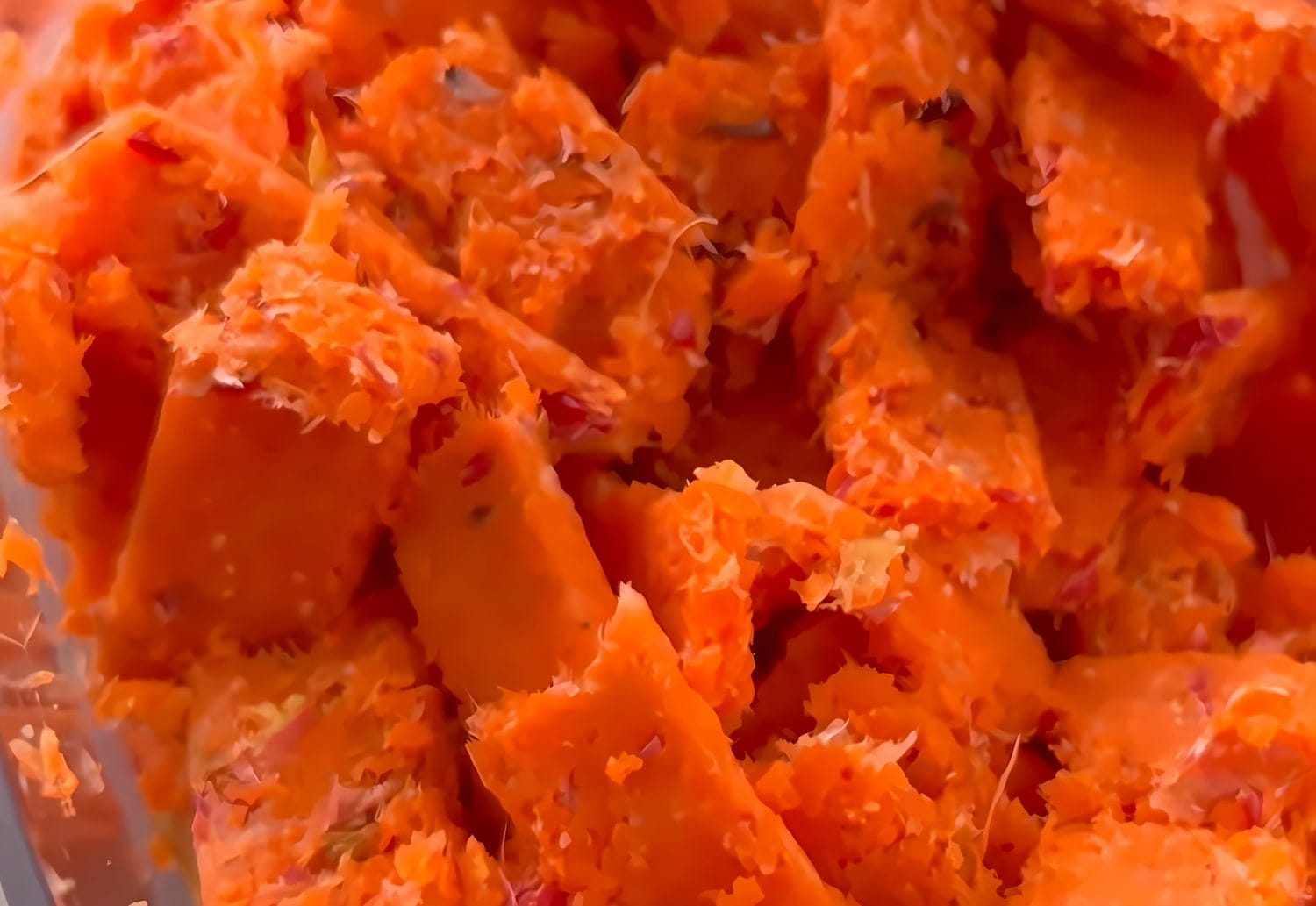
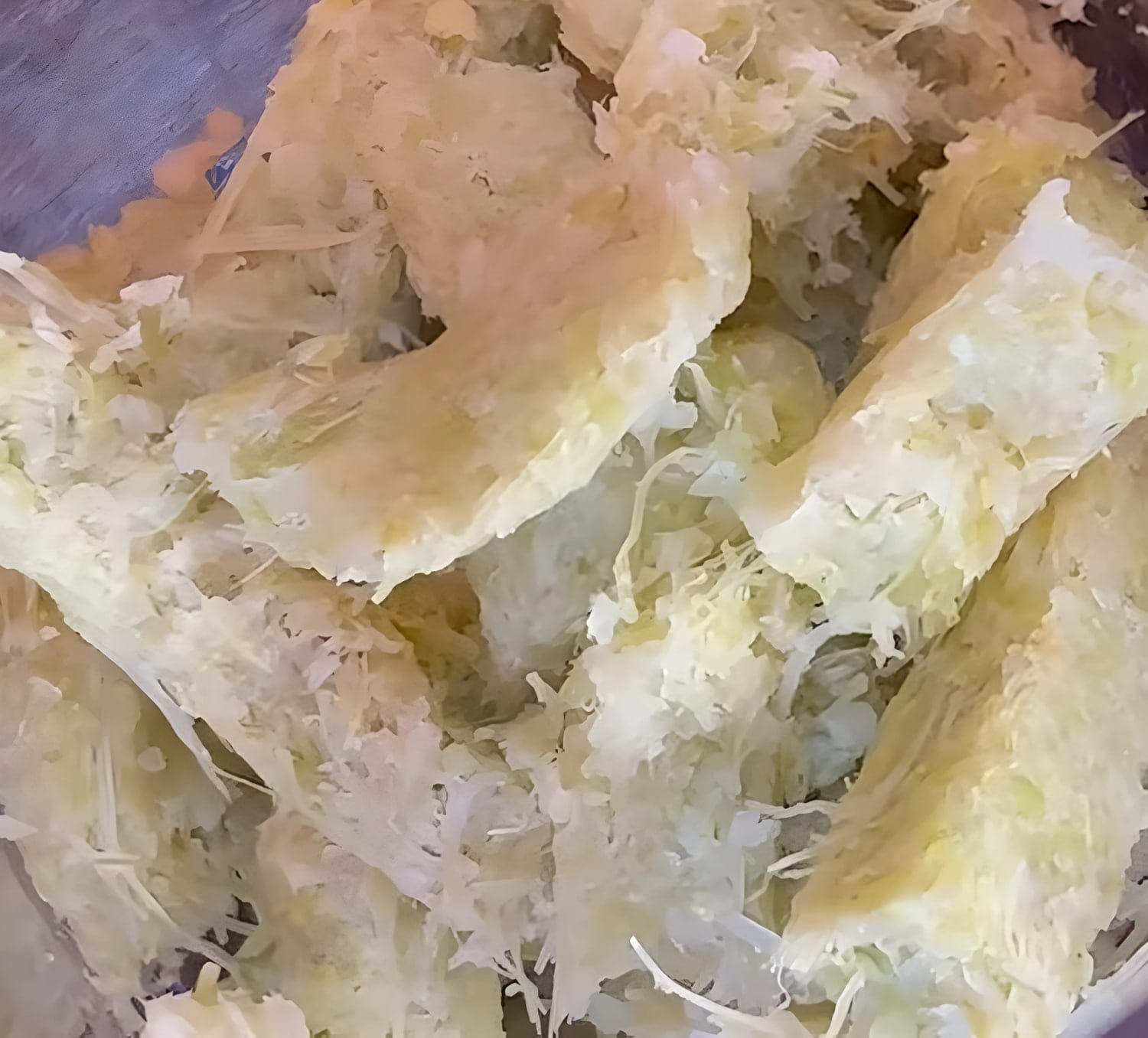
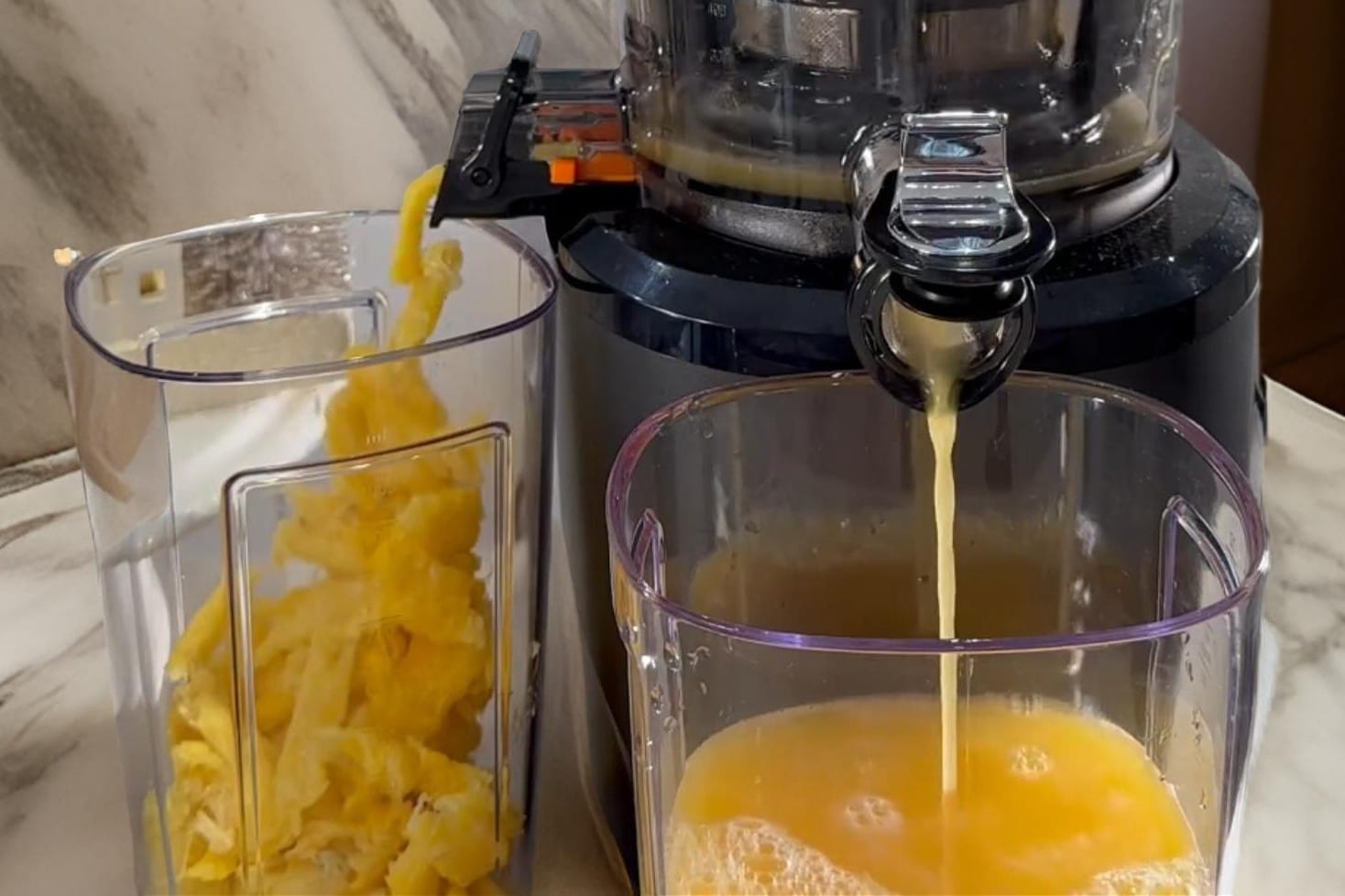
We tested the Auto10 extensively. We ran carrots, beets, celery, leafy greens, and oranges through it, and the yield was excellent across the board, which is what we expect from a premium slow juicer. The pulp comes out very dry, showing how efficiently it extracts juice.
A centrifugal juicer like the Breville Elite may edge it out on carrot yield, but for almost every other type of produce, the Auto10 pulls ahead. The only juicer that consistently extracted slightly more in our testing was the Angel twin-gear. It does squeeze more juice, but it’s also twice the price and far less convenient for everyday use.
Overall, the Auto10 is a versatile performer. It handles vegetables well, works smoothly with greens, and is one of the best juicers we’ve tested for fruits.
How loud is it?
The Auto10 runs quietly, even while juicing with tougher ingredients like whole beets. We measured roughly 64 dB. You can easily run it early in the morning without waking anyone.
Cleaning
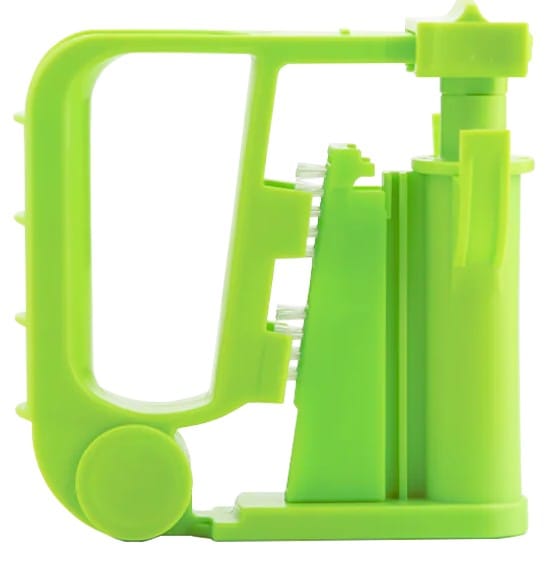
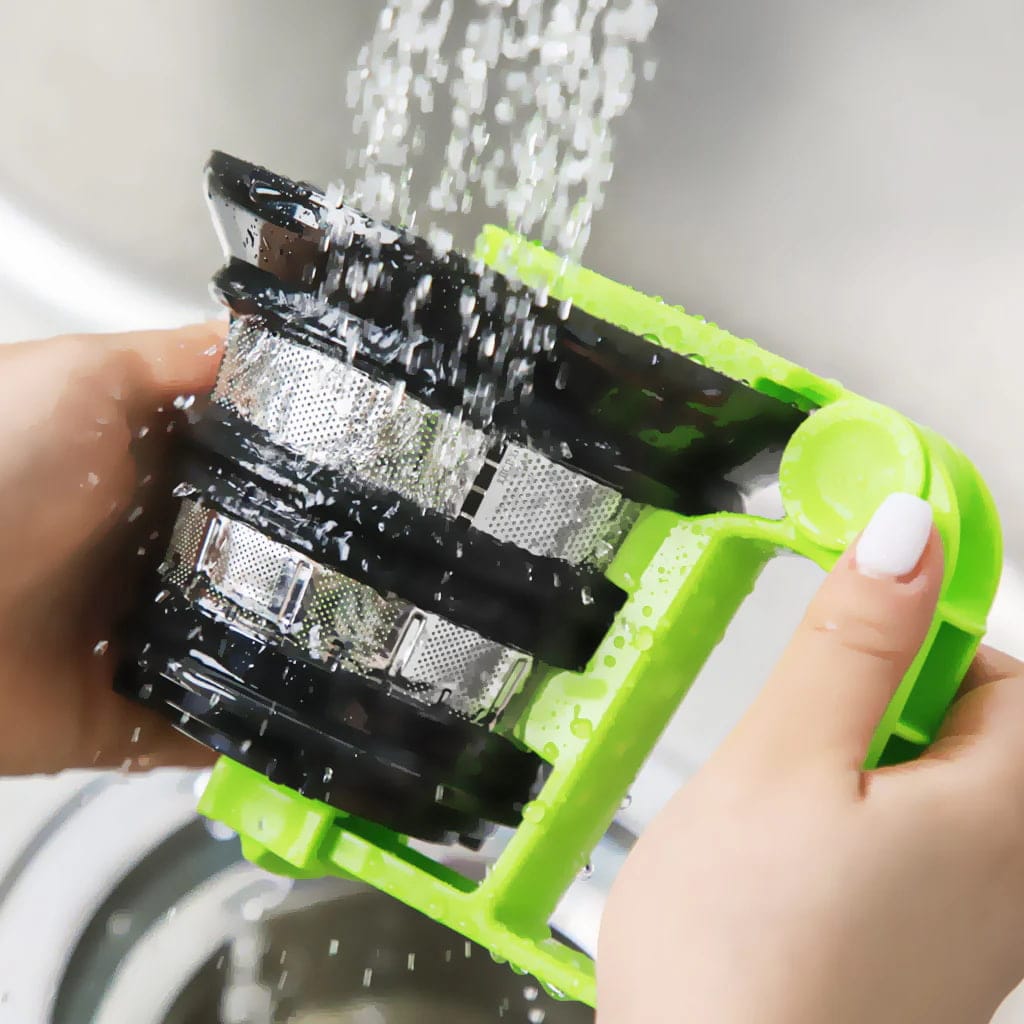
The Auto10 isn’t the easiest juicer to clean. There are multiple parts to rinse, and a quick wash under the tap won’t be enough. That said, Kuvings includes a very useful cleaning tool that genuinely helps.
It’s a big improvement over the round brush from previous Kuvings models. The old tool only cleaned the outside of the screen, while this new one scrubs both the inside and outside at the same time. And as far as we know, Kuvings is the only brand including a screen-cleaning tool this effective. Since the juicing screen is the main pain point with most vertical slow juicers, having a tool that actually works makes a noticeable difference.
We also use a quick cleaning trick that speeds things up: fill the bowl with warm water and a little dish soap, close the spout cap, run the machine for a minute, and then rinse everything out. It loosens most of the residue before you start brushing.
Overall, cleaning the Auto10 takes us about 3 minutes.
What else it can do?
Kuvings includes both sorbet and smoothie attachments with the Auto10, which adds a nice bit of versatility.
The sorbet attachment is the highlight. Most hopper juicers don’t include one, and this is where the Auto10 stands out. We’ve made banana, mango, and berry sorbets, and the texture is surprisingly close to what you’d expect from dedicated frozen dessert machines.
The smoothie strainer works well for thick, whole-food-style blends. It adds body and fiber to the drink, but it’s not meant to replace a countertop blender.
Warranty
Manufactured in South Korea, the Auto10 comes from a 45-year-old brand. It boasts a 15-year full warranty on motor and parts. For a device at this price point, that kind of backing is reassuring.
Comparison with other recommended juicers
Auto 10 vs Hurom H400
Both the Kuvings Auto10 and the Hurom H400 sit right at the top of the vertical slow juicer category, and their price points are almost identical. They’re both hopper-style machines, but Kuvings uses a traditional juicing screen, while Hurom uses their newer screenless design.
Here’s what we found in our tests:
Yield: Basically identical. No meaningful difference.
Juice Quality: Hurom produces pulpier juice due to the screenless design. You’ll feel more particulates. Kuvings juice is cleaner.
Hopper Size: Auto10 has a 3L hopper. H400 is 2L and requires more refilling when batch juicing.
Pulp Capacity: H400’s built-in bin is smaller. You may need to empty it a few times during batch juicing. Auto10 has a large external pulp container.
Assembly & Cleaning: Due to its screenless design, Hurom is easier to assemble and clean. Kuvings took us 3 minutes to clean whereas Hurom took us about one minute.
Motor: Auto10 uses a 240W motor at 50 RPM with a 45-minute runtime. H400 uses a 150W motor at 90 RPM with a 30-minute runtime. Both handled produce smoothly without stalling.
Extras: Auto10 includes sorbet and smoothie screens; H400 doesn’t include attachments but can still make sorbets.
Verdict: Choose Hurom H400 if easy cleaning is your #1 priority. Choose Auto10 for bigger batches. Both are premium machines with a 15-year warranty and both rank among the top-performing juicers we’ve tested. It just depends on what matters more to you.
Sana 727 vs Auto 10
For leafy greens, the Sana 727 is hard to beat. Its yield on greens will usually edge out the Auto10. It also assembles and cleans faster, but the small feed tube means more cutting and more active feeding.
Auto10’s juicing process is simply easier. For mixed produce—fruits, veggies, and greens—the Auto10 is the better all-rounder. For heavy leafy-green juicing, go with the Sana 727.
Final words
We’re genuinely impressed with the Kuvings Auto10. It makes it easier to juice more produce in a single run. The large hopper, hands-free operation, strong motor, and excellent overall yield make it one of the most complete hopper-style juicers we’ve tested.
If easy cleaning is your top priority, the Hurom H400 is the easier machine to live with day to day. But for higher-volume juicing with fewer interruptions, the Auto10 is the better fit.
Leave a Comment