
If you’re looking for a stainless steel juicer, you’re probably searching for something more durable than the typical plastic juicer. Stainless steel machines are often associated with better durability, easier cleaning, and a more premium feel on the countertop.
Another reason some people prefer stainless steel juicers is that the parts that come into contact with produce and juice are stainless steel rather than plastic. While most modern juicers use food-grade materials, some buyers simply prefer minimizing plastic where possible.
Before choosing a juicer, however, it’s important to understand the two main types of juicers: centrifugal juicers and masticating juicers. They work very differently and are suited to different types of juicing.
Centrifugal Juicers
Centrifugal juicers use a fast-spinning blade and mesh filter to extract juice. The blade shreds the produce, and the juice passes through a mesh filter while the pulp is separated into a container.
These juicers are designed primarily for speed and convenience.
Pros
- Very fast — a glass of juice can be ready in seconds
- Easy to assemble
- Usually more affordable than slow juicers
Cons
- Not ideal for leafy greens like kale or spinach
- Juice tends to oxidize faster than juice from slow juicers
- Louder during operation
Conclusion
Choose a centrifugal juicer if speed and affordability are your priorities and you mainly juice firm fruits and vegetables like apples, carrots, celery, and beets rather than leafy greens.
Masticating Juicers
Masticating juicers — often called slow juicers — operate at a much lower speed. Instead of shredding produce with a blade, they crush and press the produce to extract juice.
This slower extraction process typically produces higher yield and richer juice.
Pros
- Generally higher juice yield
- Works with almost all types of produce, including fruits, vegetables, and leafy greens
- Juice separates more slowly
- Quieter operation
Cons
- Slower than centrifugal juicers
- Usually more expensive
Conclusion
Choose a masticating juicer if you want higher juice yield and richer juice quality, and don’t mind spending a few minutes making juice instead of seconds. They are also typically more expensive than centrifugal juicers.
Best Centrifugal Stainless Steel juicer
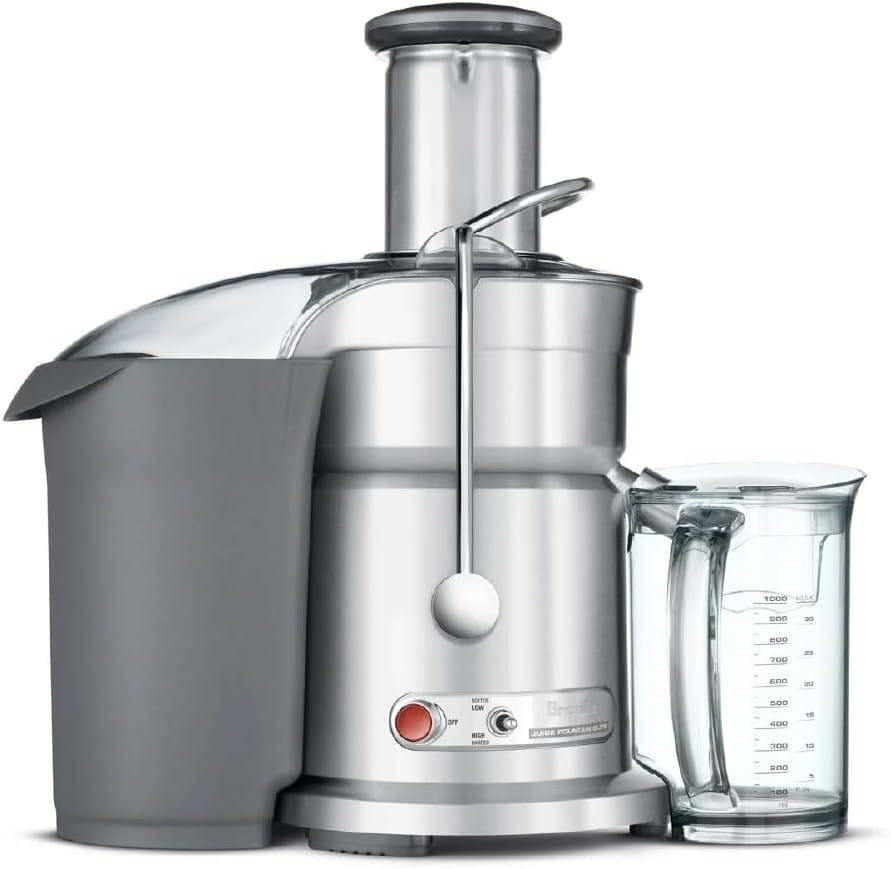
If you’re looking for a centrifugal juicer with a stainless steel body, the Breville Juice Fountain Elite is one of the most well-known models.
It features a 3-inch wide feed chute, allowing many fruits and vegetables to be processed with minimal preparation. Apples, carrots, and celery can often go straight into the machine without chopping.
The Elite is powered by a 1000-watt motor, making it one of the most powerful centrifugal juicers designed for home use. It can reach speeds of around 13,000 RPM, allowing it to produce a glass of juice in just seconds.
Like most centrifugal juicers, it performs best with firm fruits and vegetables rather than leafy greens.
Best Stainless Steel Slow Juicer
It’s worth noting that there aren’t many fully stainless steel slow juicers on the market. Most slow juicers today use plastic housings and augers.
One of the few machines built almost entirely from stainless steel juicing components is the Angel twin-gear juicer.
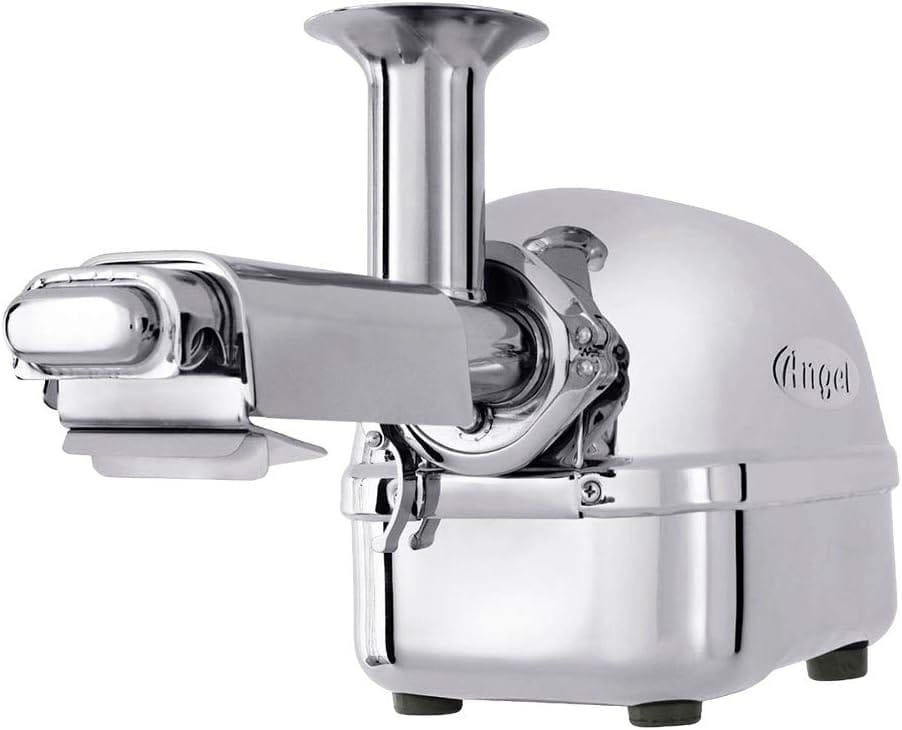
The Angel Juicer stands in a class of its own. We haven’t tested another home juicer that extracts more juice.
Across our tests — carrots, apples, oranges, grapes, and lettuce — the Angel consistently delivered the highest yield, with the driest pulp we’ve seen from any consumer juicer. The only exception was very soft pineapple, where some backing up can occur.
If you primarily juice large amounts of fruit, many people prefer the convenience of a vertical slow juicer like the Hurom H400. However, these machines typically use plastic juicing components, and we’re not currently aware of a fully stainless steel vertical slow juicer on the market.
Final Thoughts
When choosing a stainless steel juicer, the most important factor isn’t just the material — it’s the type of juicer and what you plan to juice most often.
If speed and affordability are your priority, a centrifugal juicer like the Breville Juice Fountain Elite can be a good choice. These machines are designed for quick juicing and work best with firm fruits and vegetables.
If you want higher juice yield and richer juice quality, a slow juicer like the Angel Juicer is usually the better fit. Slow juicers can handle almost all types of produce, including fruits, vegetables, and leafy greens, though they typically take a few minutes rather than seconds to make juice.
Understanding these differences will help you choose a juicer that fits your juicing routine, preferences, and expectations.