
Juicer.Kitchen Verdict

If a friend asked us to recommend a high-quality centrifugal juicer at a reasonable price, we’d confidently suggest the Breville Juice Fountain Cold. While the name includes “cold,” it’s not a cold press juicer—it’s still a centrifugal juicer, but a very good one for its class.
It shines with hard vegetables like carrots and beets, handles water-rich produce like celery and cucumber well, and delivers decent results with firm fruits like apples and pears. However, like most centrifugal juicers, it struggles with leafy greens, where slow juicers tend to perform better.
Perfect for larger households, it features a 70-ounce juice jug and a spacious pulp container, allowing you to make multiple servings without interruptions. The 3-inch wide feed chute saves time by letting you juice whole fruits and vegetables. Assembly is simple, with only a few parts to clean.
If you value speed, convenience, and solid performance at a reasonable price, the Breville Juice Fountain Cold is a solid option—just keep in mind it’s not ideal for leafy greens.
Pros
Excellent for juicing hard vegetables.
Wide feed chute
Low cost
Makes juice quickly
Easy assembly disassembly
Cons
Loud
Only 1 year warranty
Less efficient with greens
Why You Can Trust Juicer.Kitchen: We’ve been reviewing juicers for more than 12 years and have influenced over $3M in juicer purchases. Every recommendation here is based on hands-on testing, not marketing claims.
Juice Fountain Cold Detailed Review
So, Is It Really a Cold Press Juicer?
Let’s clear this up first — the word “Cold” in Breville Juice Fountain Cold doesn’t mean it’s a cold press or masticating juicer. It’s still a centrifugal juicer, using a fast-spinning blade and mesh filter to separate juice from pulp.
Breville calls it “Cold” because the juice isn’t heated during extraction — and that’s true. A fast juicer doesn’t heat juice any differently than a cold press juicer. The real difference isn’t temperature — it’s oxidation.
High-speed juicers like this one spin up to 13,000 RPM, pulling more air into the juice. That’s what causes a bit more foam and faster separation if you let it sit. Juice made in a centrifugal juicer is best enjoyed right away for maximum freshness and taste.
The main advantage of a centrifugal juicer is right in its name — speed. You can turn a pile of produce into juice in under a minute. It’s fast, convenient, and affordable. Slow juicers still edge out in juice quality and when juicing greens, but this Breville keeps up impressively well for its class.
Build
The build is classic Breville — sturdy, practical, and user-friendly. You get a large 2 L pulp container and a 70 oz juice jug with a sealing lid, so you can make juice for the whole family in one go.
The parts feel solid, though mostly plastic with a stainless steel filter basket. Everything locks into place securely, and the design is intuitive enough that you won’t need the manual after the first setup.
Two speeds. Use low speed for softer fruits and high speed for firmer produce like apples, carrots, or greens. High mode runs at 13000 RPM.
How to prep the produce?
One of the things we like about the Breville is its 3-inch wide feed chute — you can drop in whole apples or even long celery stalks without pre-cutting, which saves a lot of time.
For leafy greens, we recommend rolling them like a cigar before feeding them in. This gives a better yield compared to feeding individually.
Assembly and Cleaning
One of the best things we love about centrifugal juicers is how easy they are to assemble — and the Breville Juice Fountain Cold is no exception. Assembly is refreshingly simple: bowl → blade → lid → lock. Done.
Cleaning is not tough. Rinse every part except the motor, and wipe the motor base. Use the brush provided to clean the screen — that’s the only part that needs a bit of scrubbing.
Pro tip: insert a poly bag in the pulp bin for an even quicker cleanup. Overall, cleaning is quite easy — less than 2 minutes from start to finish.
Juice Quality, Taste & Yield
Juicing Carrots
Many people assume centrifugal juicers can’t compete with slow juicers in yield — but that’s not true for every kind of produce. In fact, carrots are where the Breville Juice Fountain Cold really shines.
In our tests, it produced more juice than most vertical and horizontal slow juicers. Only the $1500 Angel Twin Gear managed to beat it.
Of course, slow juicers still have a slight edge in juice quality, but if you mainly juice carrots or other firm vegetables, the Breville will likely give you more juice per pound — and do it in just a few seconds.
Juicing Oranges & Tangerines
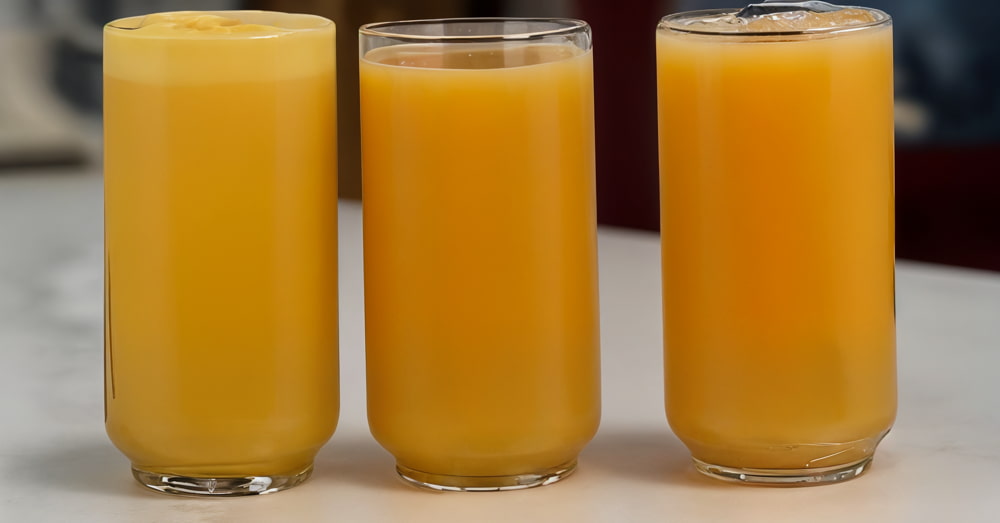
Citrus testing brought some interesting results. We compared firm oranges using the Breville Centrifugal, Omega horizontal slow juicer, and Omega vertical juicer. The yield was nearly identical across all three — so in terms of quantity, no clear winner.
Where things differed was in texture. The Breville’s juice came out lighter and frothier, typical of centrifugal juicers that pull in air at high speed. It’s not a problem, but if you prefer that dense, pulp-rich orange juice, a slow juicer gives a more satisfying body and mouthfeel.
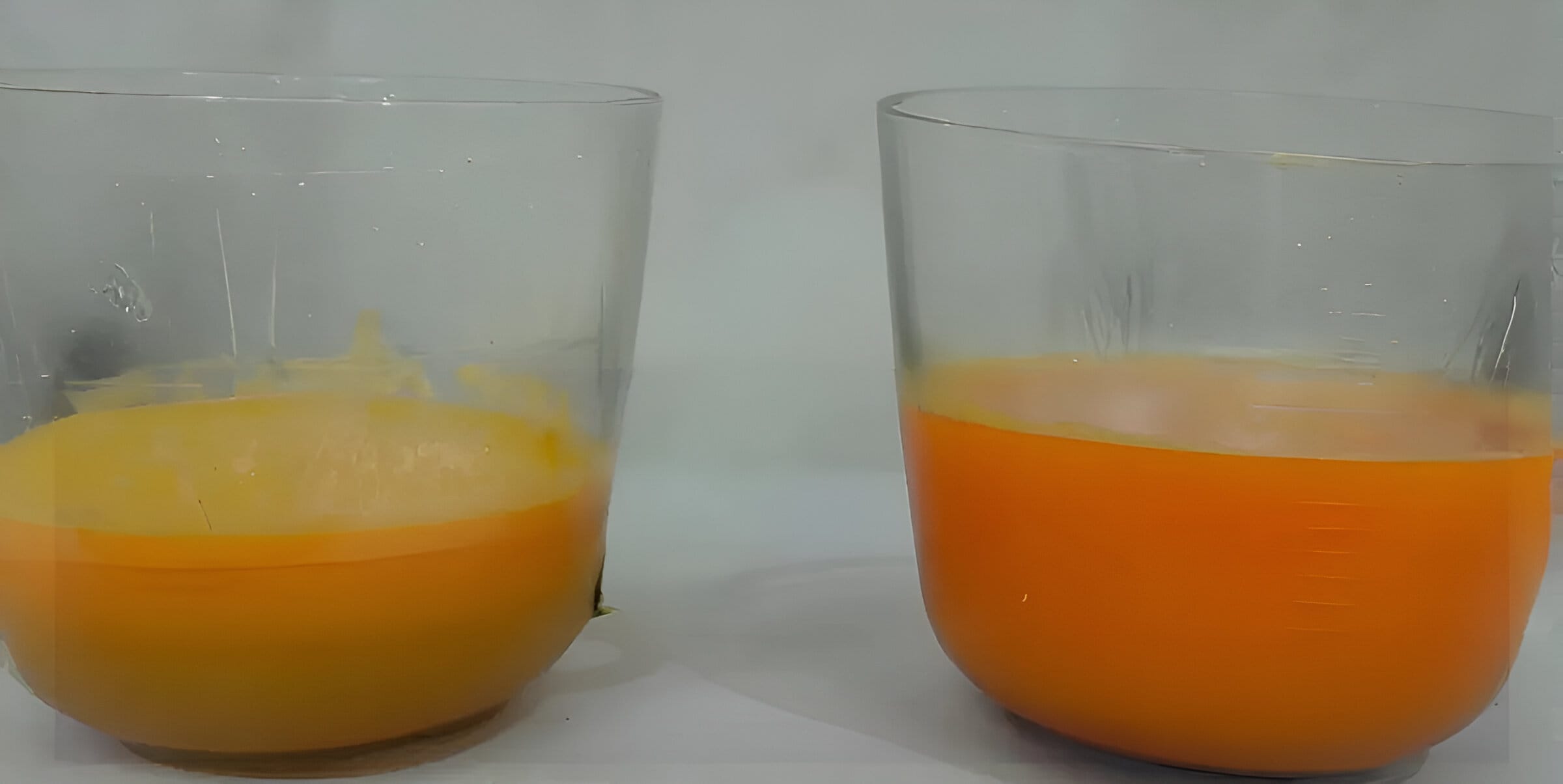
With soft tangerines, the gap widened. The vertical slow juicer produced about 50% more juice than the Breville Juice Fountain Cold. Softer fruits simply don’t fare as well in centrifugal machines — they tend to splatter and lose yield once the pulp turns mushy.
In short:
- Firm oranges → Breville keeps up just fine.
- Tangerines and softer fruits → go with a slow vertical juicer like Hurom H400 for better yield and texture.
Juicing Leafy Greens
This is where centrifugal juicers usually struggle.
Here’s what we found for 2 lb (907 g) of the same produce:
- Breville Juice Fountain: 9.2 fl oz (272 ml) in 2:45 mins
- Omega vertical slow juicer: 16.0 fl oz (472 ml) in 6:52 mins
- Sana horizontal slow juicer: 16.9 fl oz (500 ml) in 6:13 mins
- Angel Twin Gear: 19.3 fl oz (571 ml) in 9:19 mins
Slow juicers like Sana or Omega NC800 clearly lead here — more juice and richer flavor. The Breville is fine for quick greens in a mix, but not for pure green juice.
Juicing Celery
If you mostly juice celery, a centrifugal juicer like the Breville Juice Fountain Cold makes a strong case for itself. It’s the fastest and most affordable way to get a glass of fresh celery juice — and surprisingly effective at it.
Centrifugal juicers tend to do best with high–water–content produce like celery and cucumber. In our test, the Breville tore through a full bunch in under a minute and produced a yield nearly identical to most slow juicers — except the Angel, which still holds the top spot.
The juice itself was light and refreshing, though slightly more watery than the slow juicers. Still, for the speed, convenience, and price, the Breville delivers excellent results for anyone juicing celery daily.
Noise
It’s definitely on the louder side — about 85 dB. You’ll hear it across the room, and it might wake someone if you’re juicing early in the morning.
Warranty
Breville includes just a 1-year warranty with this model. The build quality feels solid, and these machines usually last many years with regular use, but the short warranty is still a letdown. High-end slow juicers that cost about twice as much often come with 10–15 year warranties, so it’s something to keep in mind if long-term coverage matters to you.
Multifunctionality
The Breville Juice Fountain Cold is designed for one thing: juicing, and doing it fast. That’s it.
Unlike slow juicers, it can’t make nut butter, sorbets, or baby food — it’s a single-purpose machine. If you’re okay with a juicer that focuses purely on speed and simplicity, it works well. Otherwise, you’ll want a slow juicer for more versatility.
Breville Juice Fountain Cold vs Cold Plus vs Cold XL
Breville Juice Fountain Cold comes in three variants – Juice Fountain Cold, Juice Fountain Cold Plus, Juice Fountain Cold XL.
| Model | Motor | Chute Width | Speed | Build | Price Range |
|---|---|---|---|---|---|
| Cold | 850 W | 3″ | Two speed | Plastic | ~$200 |
| Cold Plus | 1000 W | 3.5″ | Two speed | Brushed Stainless Steel motor base, bowl plastic | ~$250 |
| Cold XL | 1200 W | 3.5″ | Variable speed | All Metal except top covering lid and pusher. | ~$400 |
If you want something sturdier and heavier-duty, the Cold XL is worth the upgrade. Otherwise, the standard Cold hits the best value spot.
Other recommended Juicers
For the price, the Breville Juice Fountain Cold is hard to beat. It’s fast, convenient, and delivers solid results for everyday fruits and veggies.
If you want higher-quality juice with added convenience, the Hurom H400 is a top pick — though it sits closer to the $600 range.
For those who prefer the richer juice quality of a slow juicer but want to stay nearer to the $350 range, models like the Omega VSJ843 strike a strong balance between performance and price.
Final words
The Breville Juice Fountain Cold is often our first recommendation when someone is looking for a centrifugal juicer. It’s quick, solid, and especially strong with hard vegetables like carrots and beets. It also handles celery, cucumber, and firm fruits such as oranges or apples well.
Leafy greens aren’t its strength — slow juicers still lead there. And like most centrifugal machines, the juice is lighter and more aerated, so it’s best enjoyed right away.
Cleanup is straightforward, and for its price, it offers strong value. Simple, quick, and reliable — it makes fresh juice without unnecessary fuss.

Leave a Comment